Ops-ortunities
Surfacing the operational opportunity space
Ops-ortunities is our playful name for a very serious part of discovery: understanding the opportunity space for your company. Every organization has friction. Every organization has hidden strengths. Every organization has practices that work beautifully in one place and haven't spread, and other practices that keep going mostly because “that's how we've always done it.”
This exercise helps us surface all of that in a structured, lightweight way. Think of it as holding up a mirror to how things currently work, but with a lens that highlights possibility rather than blame.
Ops-ortunities is broken into two parts:
- A simple but powerful mad-lib exercise that helps teams articulate opportunities.
- A visual placement exercise that maps each opportunity along a lifecycle curve of “seed → scale → optimize → sunset.”
Together, these exercises give us a nuanced picture of where Dotwork can unlock the most value.
Part 1 — Opportunity Mad Libs
This part is intentionally lightweight. Instead of asking people to define “problems,” we invite them to phrase opportunities using one of two simple mad libs. These are framed to encourage constructive, non-blaming language and help people express the underlying operational dynamics they're experiencing.
Teams can use either mad lib—whichever feels most natural.
Mad Lib Option A
If we can figure out how to [increase / decrease] the [attribute or dynamic] of [process, system, or behavior] for [a specific person or group], we could unlock [meaningful benefit].
Examples:
- If we can increase the visibility of impact for research teams, we could unlock stronger motivation and tighter collaboration with product.
- If we can decrease the cognitive load of onboarding for new team members, we could unlock faster ramp-up and earlier engagement.
Mad Lib Option B
If we can figure out how to [increase / decrease] the [attribute or dynamic] of [a process, system, or behavior], we could unlock [a meaningful benefit].
Examples:
- If we can decrease the number of disconnected tools in use, we could unlock cleaner workflows and more reliable reporting.
- If we can increase the consistency of how priorities are updated, we could unlock better alignment across planning cycles.
Instructions
- Brainstorm as many opportunities as possible using one of the two templates.
- Stay concrete. Think in terms of actual behaviors, rituals, systems, and dynamics you observe.
- Don't debate wording. Capture ideas quickly.
- No problem is “too small” or “too obvious.”
- Don't overthink the benefit; it's fine if it feels directional.
- The goal is to generate raw material for the next part of the exercise.
At the end of this step, you'll have a page full of clear, actionable statements—each representing a meaningful operational opportunity.
Part 2 — Mapping Opportunities Along the Lifecycle Curve
After generating the opportunity statements in Part 1, we shift the focus from the statements themselves to the underlying practices, rituals, workflows, and capabilities they point to. In this step, we place those real practices along a simple lifecycle curve that ranges from “promising pilot” to “ready to sunset.”
The goal is not to judge the practices but to locate them. This gives us a clearer view of the operating landscape: where momentum already exists, where things are fragile or overly manual, where teams have hit plateaus, and where Dotwork can help scale, strengthen, or streamline what's already working.
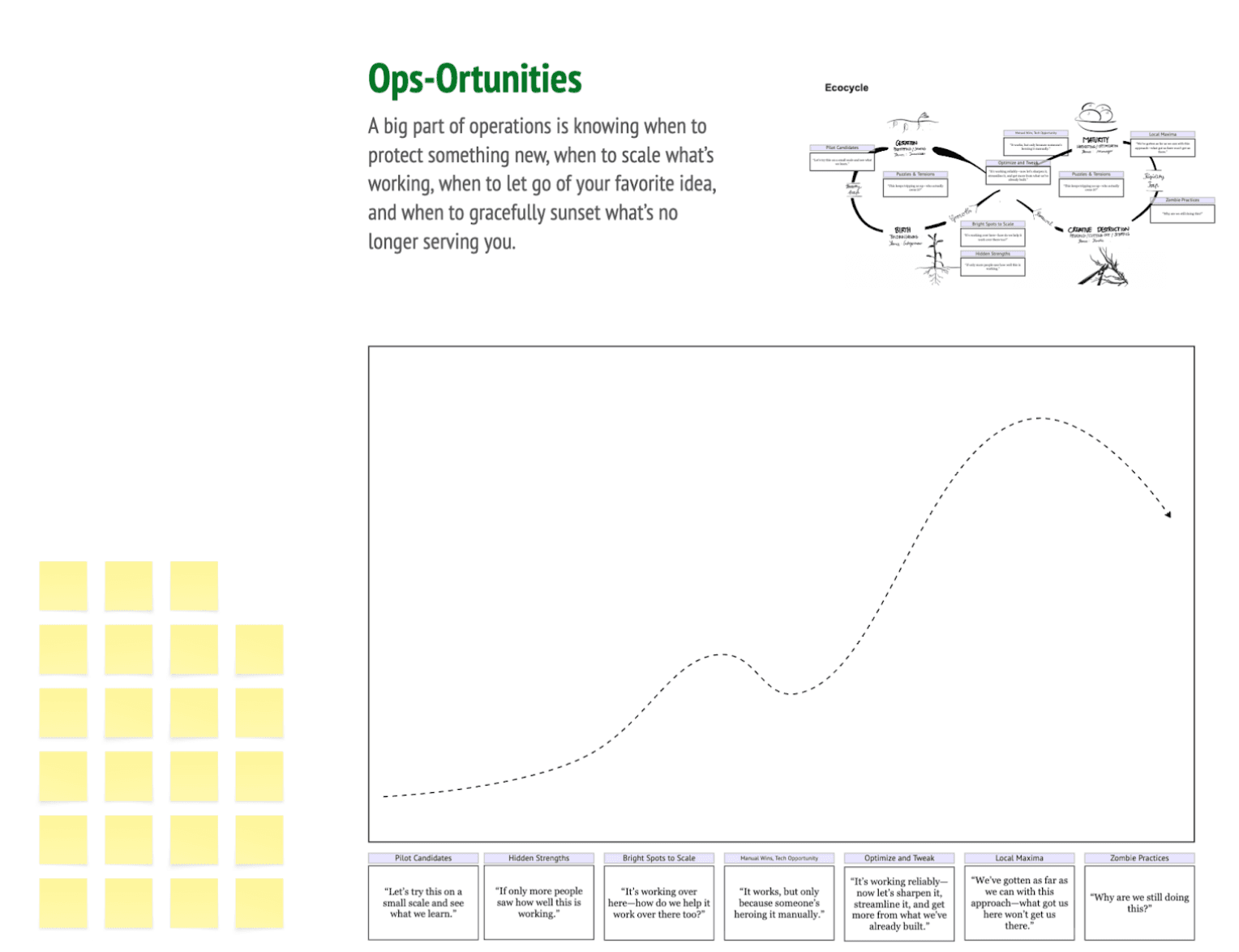
Below are the seven categories used in the mapping exercise:
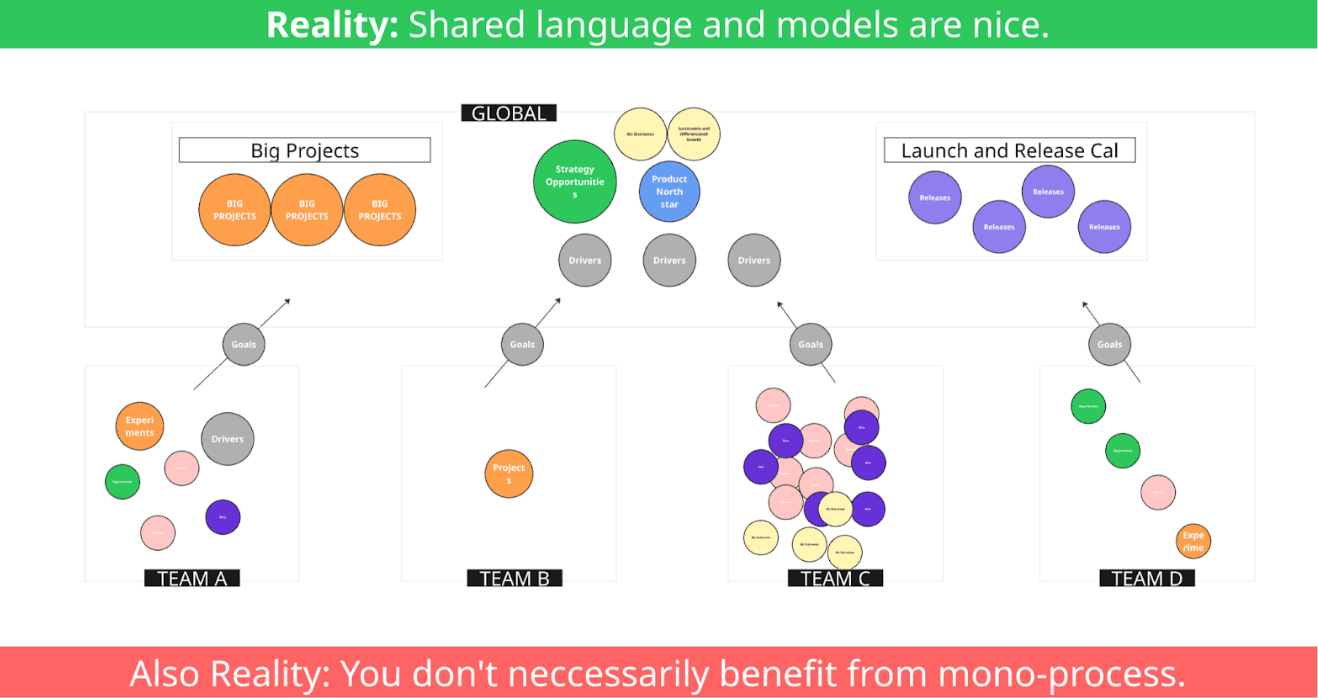
| Category | Anchoring Quote | Description |
|---|---|---|
| Pilot Candidates | "Let's try this on a small scale and see what we learn." | Early ideas worth testing. Promising and low-risk, but not yet tried in a real environment. |
| Hidden Strengths | "If only more people saw how well this is working." | Quietly successful practices known only to a subset of the org. Often have outsized potential if surfaced or shared more widely. |
| Bright Spots to Scale | "It's working over here—how do we help it work over there too?" | Strong, reliable practices delivering value in one pocket of the org. Excellent candidates for scaling or standardizing. |
| Manual Wins / Tech Opportunities | "It works, but only because someone is heroing it manually." | Fragile successes where the practice is right but the workflow is brittle or overly manual. Ripe for automation, tooling, or structured workflows. |
| Optimize and Tweak | "It's working reliably—now let's sharpen it, streamline it, and get more from what we've already built." | Stable practices that are good but not yet great. Benefit from refinements, better integration, or reduced drag. |
| Local Maxima | "We've gotten as far as we can with this approach—what got us here won't get us there." | Approaches that have reached a plateau. Further progress requires a shift, not incremental improvement. |
| Zombie Practices | "Why are we still doing this?" | Practices that have outlived their usefulness. Continue due to inertia, habit, or lack of an obvious replacement. |
Instructions for the Mapping Activity
- Print or post the lifecycle categories.
- Take the practices, rituals, workflows, and capabilities surfaced in Part 1 and place each one where it best fits.
- Move quickly. This is about spotting patterns, not debating terminology.
- Group similar practices together as you go.
- Step back and look at the overall distribution: Where are most practices today? Where do the biggest clusters form?
- What's missing or underrepresented on the curve?
- Notice cross-cutting patterns (for example, “lots of manual wins,” “very few bright spots,” “many local maxima”).
Examples
Practice: Quarterly “Insights to Action” Review
Category: Bright Spots to Scale
One product trio had been running a simple monthly insights review. They pulled together customer learnings, recent experiments, and telemetry signals, then decided on two or three follow-up actions. Other teams had heard about it but never adopted it. When we looked closer, this practice had been quietly improving prioritization quality and reducing churn. It was working consistently, and the team had already refined the format over six months. This made it a strong candidate to scale across the org.
Practice: The “Monday Metrics Sheet” Created By One Analyst
Category: Manual Wins / Tech Opportunities
Every Monday at 8 AM, a single analyst downloaded data from four systems, cleaned it up in Excel, color-coded it, and pasted it into Slack. Teams depended on this view to open their week, but the whole thing broke whenever the analyst was out. The content was valuable, the cadence was reliable, and the sheet influenced several decisions every week. The workflow, however, existed entirely on heroic effort. It was the classic “this works only because one person pushes it uphill.”
Why Ops-ortunities Matter
This exercise gives us a rich, honest picture of how your organization operates. It surfaces:
- Real areas of friction
- Real areas of strength
- Where excellence already exists
- Where things are fragile
- Where things are stuck
- Where effort is being wasted
- Where small changes could unlock big wins
- Where Dotwork can help instrument, support, automate, or amplify existing workflows
The combination of mad libs and lifecycle mapping helps us see opportunity not as a big ambiguous problem space, but as something concrete and navigable—a set of actionable, well-framed opportunities that we can design Dotwork around.
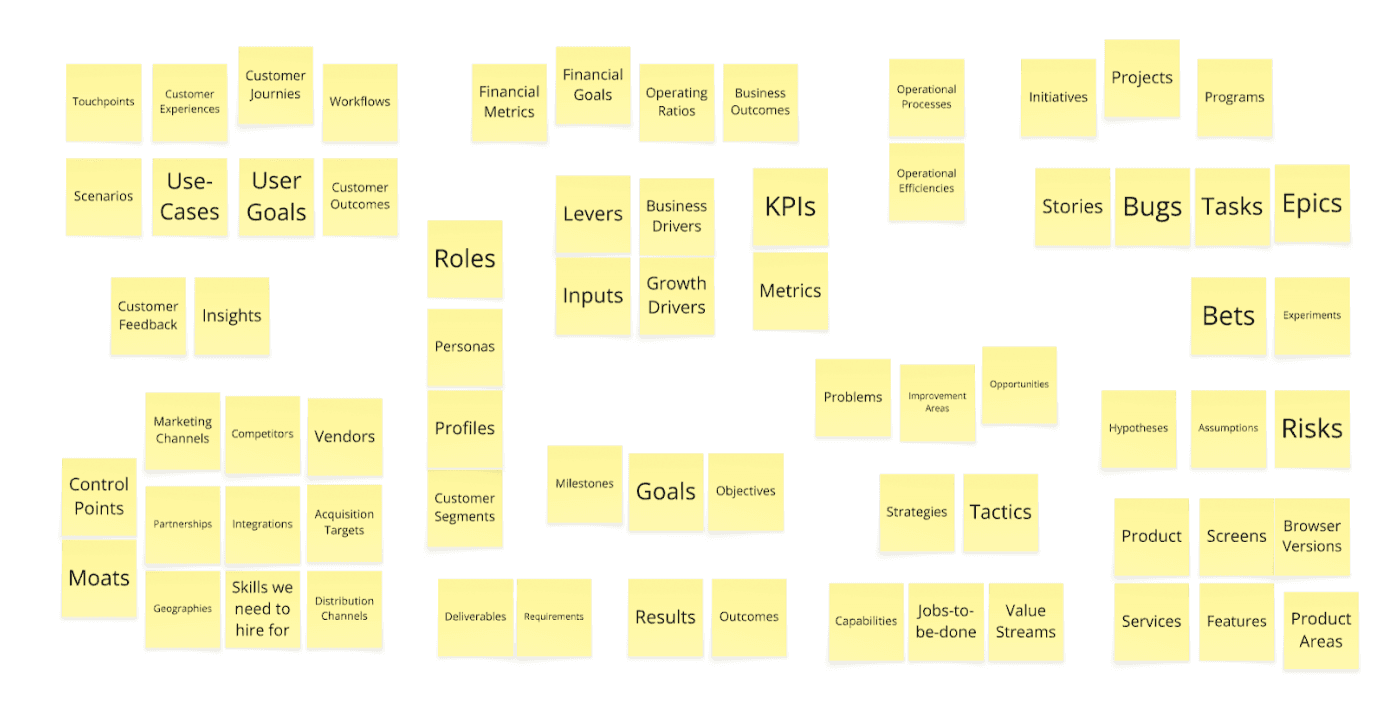
Reference: Capabilities from “Transformed”
The following list of high-level capabilities was extracted from Marty Cagan's Transformed. If your team is looking for Ops-ortunity ideas, this is a good place to start.
| Capability Area | Increase | Decrease |
|---|---|---|
| Discovery Research and Insights | Generative and evaluative research, direct customer access, engineer participation, instrumentation, and live-system monitoring. | Shipping features without validated insights or understanding the real user need. |
| Aligned Autonomy and Structure | Clear problem ownership, stable missions, empowered decisions, and trust in teams. | Constant reorgs, ad hoc dependencies, and top-down directives that disrupt autonomy. |
| Problem and Outcome Focus | Framing work around problems, outcomes, hypotheses, and success criteria. | Feature-factory output where teams ship things with no clarity on why they matter. |
| Strategic Context Sharing | Broad access to vision, customer journeys, competitive context, and strategic rationale. | Siloed plans, stale decks, and teams guessing the priorities. |
| Transparency and Visibility | Real-time visibility of roadmaps, experiments, analytics, learnings, and dependencies. | Hidden backlogs, invisible work, and late-breaking surprises. |
| Stakeholder Participation and Leadership Support | Leadership sponsorship, coaching, unblockers, and active involvement in learning. | Directives issued without context, support, or follow-through. |
| Alignment, Communication, and Collaboration | Shared language, clear frames, predictable decision paths, and healthy cross-team coordination. | Coordination tax, ambiguous ownership, conflicting stories, and side systems. |
| Process Friction and Decision Path Health | Lean, understandable approval paths and efficient decision flows. | Excessive gates, committees, ritualized prep, and slow cycles. |
| PM Role Strength and Experience | Domain fluency, discovery and delivery mastery, strategic thinking, and stakeholder partnership. | Order-taking behavior or relying on PMs who only push process. |
| Culture of Learning and Coaching | Regular retros, experiment reviews, coaching, and shared learning loops. | Blame, fear, and a status-quo mindset that discourages risk or experimentation. |
| Funding and Investment Mentality | Joint planning with Finance, outcome-based funding, flexible budgeting as teams learn. | Rigid long-range forecasts that ignore uncertainty and force premature commitments. |
You're Done When
- You've generated a list of clear, concrete opportunity statements using the Mad Libs.
- You've placed the underlying practices on the lifecycle curve.
- You've spotted clusters, gaps, and leverage points.
- You've captured 5–10 insights about friction and strengths across the org.